












In a world that celebrates speed, reaction, and immediate relief, patience often feels outdated—almost impractical. Yet the saints remind us that what appears quiet is often the strongest force of all. In his profound verses, the revered poet-saint Nishkulanand Swami reveals a timeless spiritual truth: no wealth in this world compares to patience.
This hymn is not merely poetry. It is a spiritual mirror, asking us to reflect on how we face hardship—and where our true strength lies.
Forbearance: Wealth That Never Fails
The Riches That Appear in Hard Times
Nishkulanand Swami begins with a striking declaration:
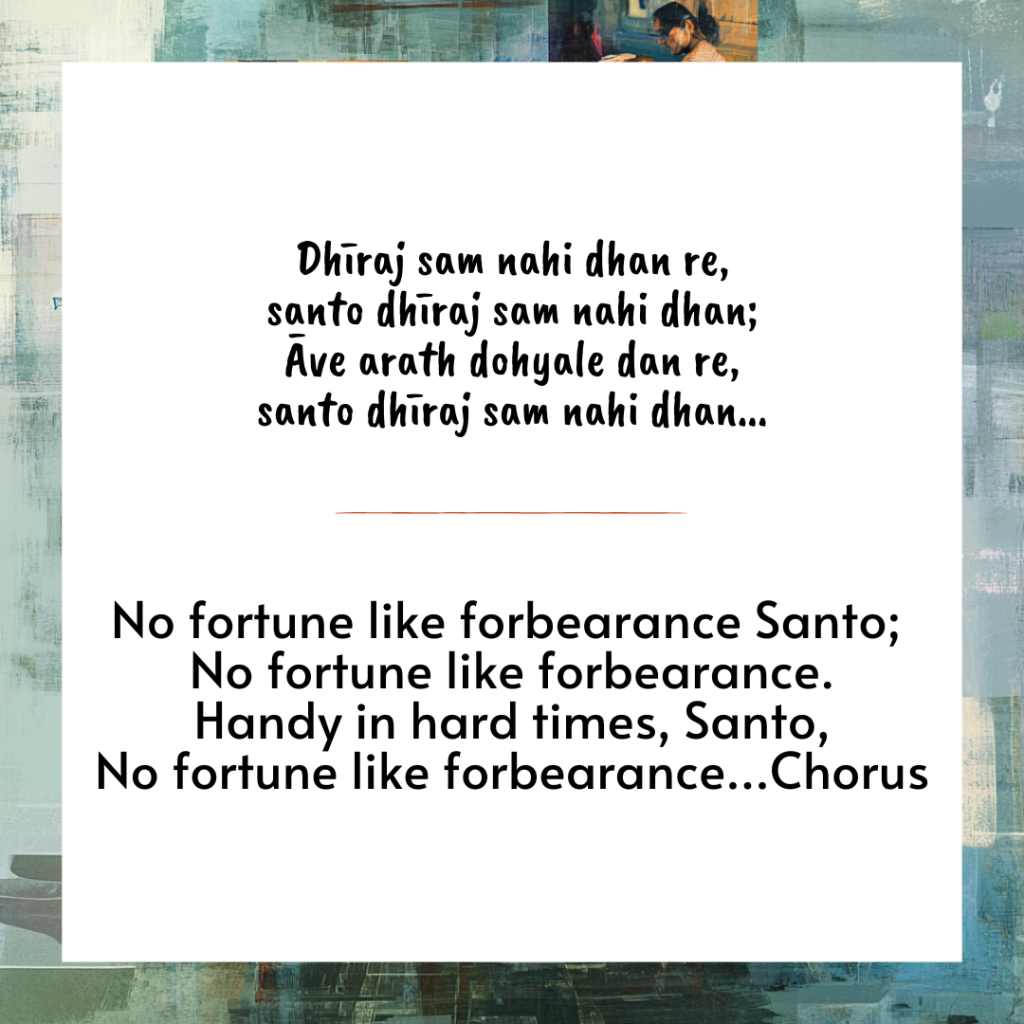
“No fortune like forbearance, Santo;
Handy in hard times, no fortune like forbearance.”
When life is comfortable, many qualities appear admirable. But when hardship strikes, most fall away. Patience, however, rises to the surface precisely when everything else fails.
“Patience is not the absence of difficulty;
it is the strength that carries us through it.”
Unlike material wealth, patience does not diminish when tested—it reveals its true value.
Silent Strength in the Face of Suffering
Enduring Without Complaint
The hymn paints a powerful image of those who are truly patient. When severe sorrow arrives—grief so heavy it tests the body itself—the steadfast do not collapse into despair.
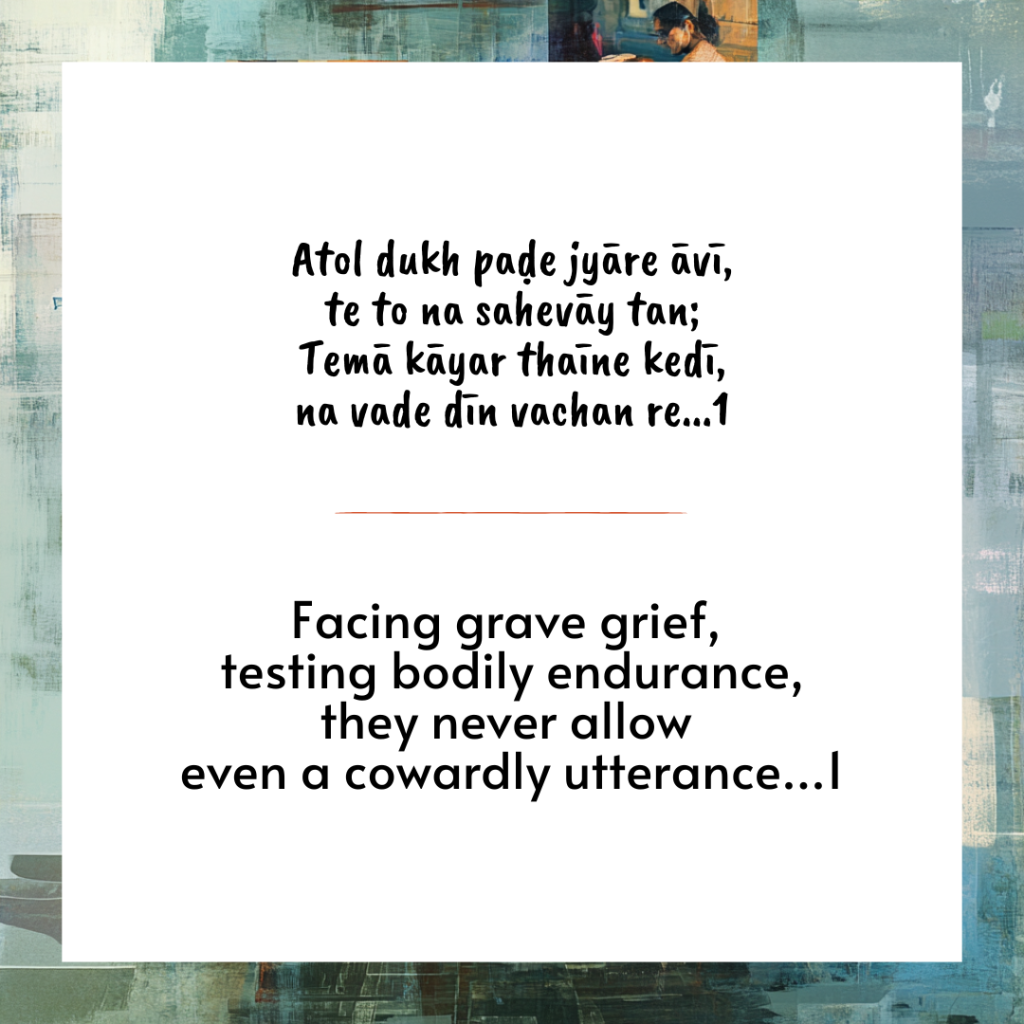
“Facing grave grief,
they never allow even a cowardly utterance.”
This is not suppression of pain. It is mastery over reaction. The patient do not deny suffering—they simply refuse to let suffering define them.
Strength Without Noise
In a world quick to complain, the saint honors silent endurance. The truly resilient do not announce their pain. Their dignity lies in perseverance, not protest.
When Evil Tests the Patient
Trials Do Not Break the Steadfast
Nishkulanand Swami acknowledges a hard truth: those who practice patience will be tested.
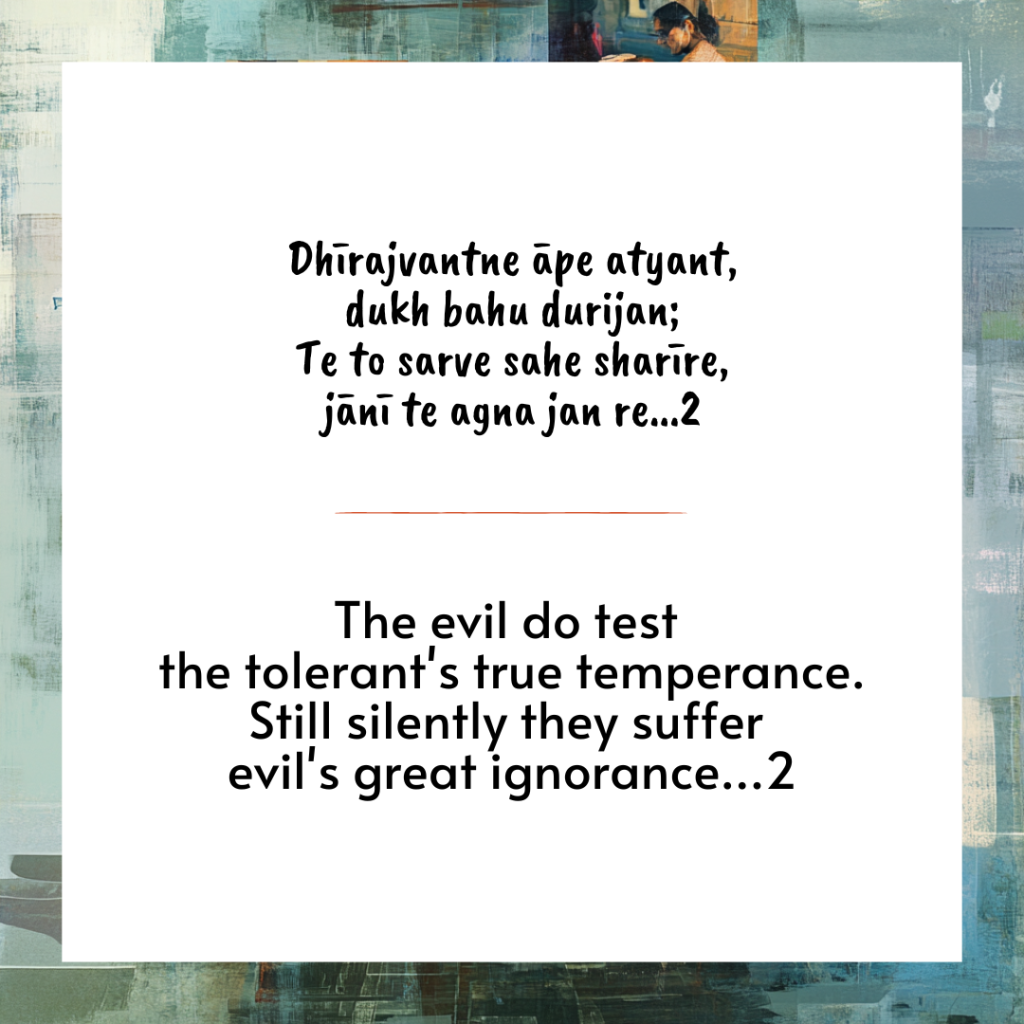
“The evil do test the tolerant’s true temperance.”
Hardship, injustice, and cruelty often target the gentle and the steady. Yet the patient do not abandon their nature. They suffer in silence—not out of weakness, but out of understanding.
“Their resilience is not avoidance, but awareness.”
They know that pain is temporary, but character is eternal.
Patience Leads to Peace
Reaching the Abode of Peace
The hymn assures us that perseverance is never wasted.
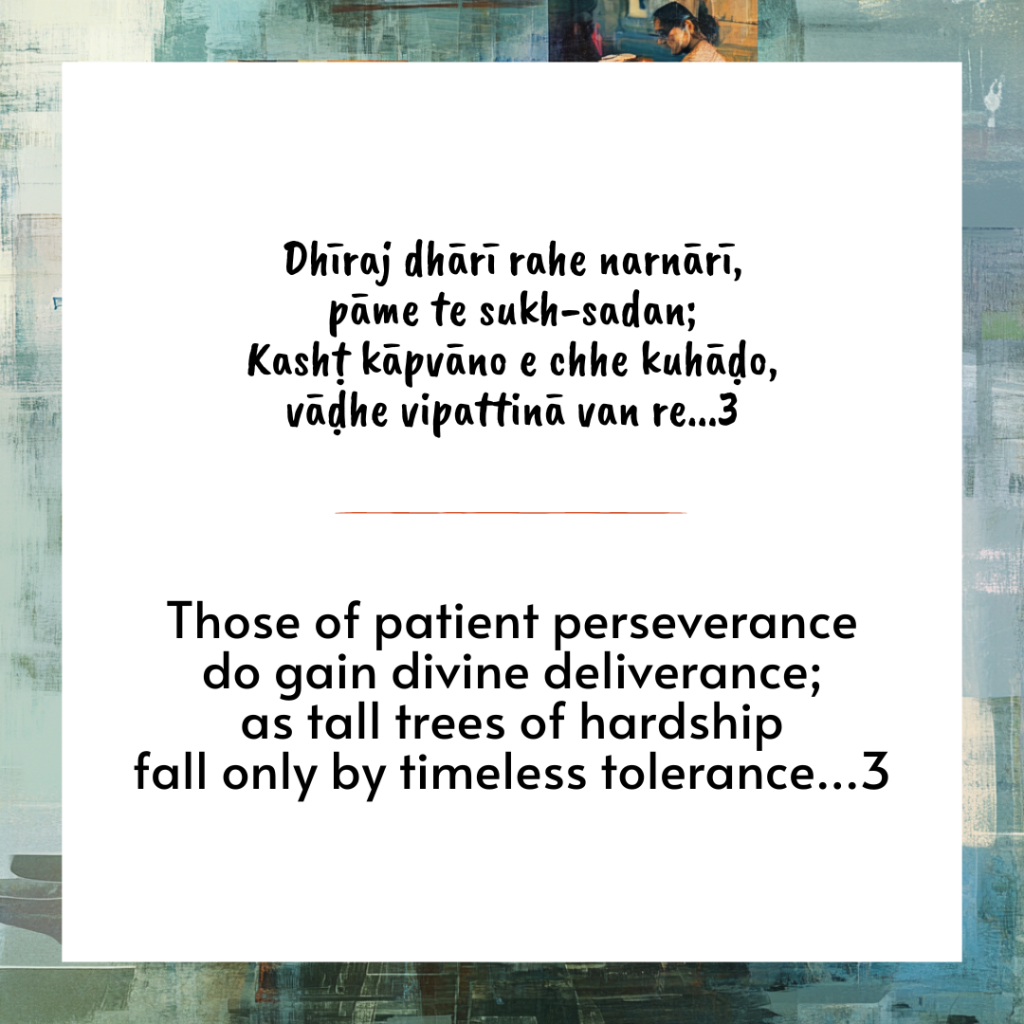
“Those of patient perseverance
do gain divine deliverance.”
Patience is compared to standing tall like a tree in a storm. It is not the storm that destroys—but the lack of roots. Those without endurance break early. Those with patience remain standing until peace arrives.
Sukh-sadan—the abode of peace—is not reached by escape, but by endurance.
Saints and Seekers Who Lived This Truth
Sita, Kunti, and Draupadi
The hymn concludes by pointing to powerful examples:
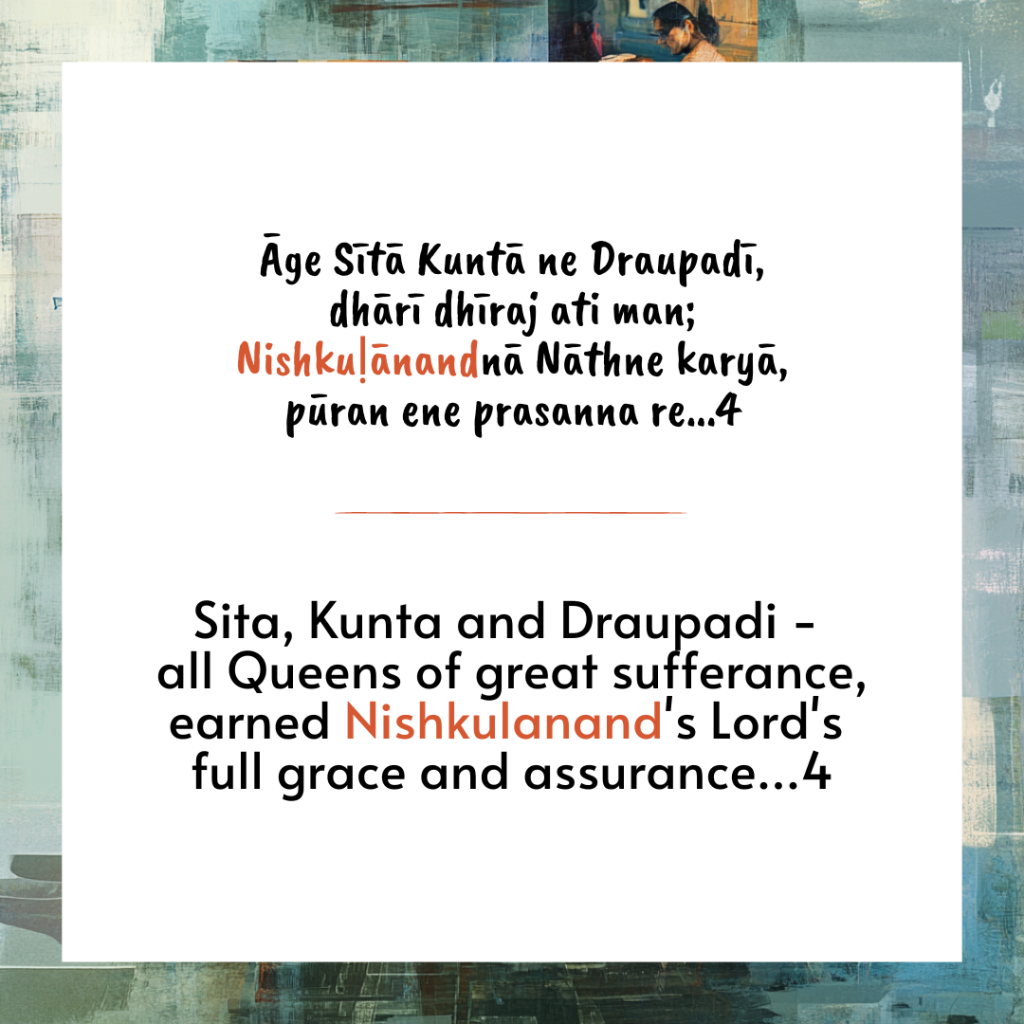
“Sita, Kunti, and Draupadi—
all queens of great sufferance—
remained steadfast and earned divine grace.”
Their lives were marked by immense suffering, yet they never surrendered their faith or dignity. Their patience was not passive—it was active trust in dharma.
Because of this, they became recipients of divine grace.
Conclusion: Choosing Our Greatest Wealth
Nishkulanand Swami’s hymn leaves us with a quiet but piercing question:
When hardship comes, do we react—or do we endure?
Patience is not weakness.
It is not delay.
It is not resignation.
It is the greatest fortune a soul can possess.
May we learn to see patience not as something we are forced into, but as something we consciously cultivate. For those who endure with faith, humility, and resilience never truly suffer—they rise.
Because in the economy of the soul, patience is the richest treasure of all.
| Verse | Translation |
| Dhiraj sam nahi dhan re, santo dhiraj sam nahi dhan; Ave arath dohyale dan re, santo dhiraj sam nahi dhan… | No fortune like forbearance Santo; No fortune like forbearance. Handy in hard times, Santo, No fortune like forbearance…Chorus |
| Atol dukh pade jyare avi, te to na sahevay tan; Tema kayar thaine kedi, na vade din vachan re.. 1 | Facing grave grief, testing bodily endurance, they never allow even a cowardly utterance…1 |
| Dhirajvantne ape atyant, dukh bahu durijan; Te to sarve sahe sharire, jani te agna jan re…2 | The evil do test the tolerant’s true temperance. Still silently they suffer evil’s great ignorance…2 |
| Dhiraj dhari rahe narnari, pame te sukh-sadan; Kasht kapvano e chhe kuhado, vadhe vipattina van re…3 | Those of patient perseverance do gain divine deliverance; as tall trees of hardship fall only by timeless tolerance…3 |
| Age Sita Kunta ne Draupadi, dhari dhiraj ati man; Nishkulanandna Nathne karya, puran ene prasanna re…4 | Sita, Kunta and Draupadi – all Queens of great sufferance, earned Nishkulanand’s Lord’s full grace and assurance…4 |
Introduction on Paramhansa (Text): https://www.baps.org/About-BAPS/TheFounder%E2%80%93BhagwanSwaminarayan/Legacy/Disciples/Paramhansas.aspx
Anirdesh – Shidne rahie re kangal re (Translation): https://www.anirdesh.com/kirtan/study.php?by=type&type=Translation&part=1&no=413
Akshar Amrutam – Shidne rahie re kangal re (Audio): https://app.aksharamrutam.in/LcBa8zaeaZnCFG9x7

+ There are no comments
Add yours